
The Group Behind the Technology
Listed on Bursa Malaysia, AWC Berhad is an engineering services group. It operates across four divisions: Integrated Facilities Management, Engineering Services, Environment and Rail. STREAM Environment is the wholly-owned environmental division, having moved from a majority holding to full ownership under the group.
As the wholly-owned environmental division of AWC Berhad, Stream Environment designs, manufactures and maintains complete automated waste collection systems across nine countries.
Analyst coverage of AWC Berhad has placed STREAM's Malaysian market share in automated waste collection at around 90%. The position in Singapore is smaller but growing. The environment division has also become a leading profit contributor within the group, which is unusual for a technology many still assume is niche.
Regional presence extends well beyond Malaysia. STREAM operates across nine countries. Those include Singapore, the United Arab Emirates, Qatar, Australia, China, India, Saudi Arabia and Indonesia.

How STREAM Drives AWC Berhad's Green Portfolio
STREAM is not an equipment reseller. The company designs, manufactures, installs and maintains complete subterranean vacuum waste networks. That is a materially different proposition from supplying components into someone else's system.
Three proprietary technologies underpin that capability. Gravity Vacuum Systems, Full Vacuum Systems and the energy-efficient Shuttle Vacuum System each serve different building types. Together they give AWC Berhad an environmental offer that replaces manual collection with an enclosed utility grid.
The fit with the group's facilities management business is the commercially interesting part. A developer buying AWCS is buying infrastructure that needs maintaining for decades. AWC Berhad already operates at that end of the market.


What STREAM Actually Builds
STREAM does not merely supply equipment; they engineer, manufacture, install, and maintain complete end-to-end Automated Vacuum Waste Collection Systems (AWCS).
Pneumatic Subterranean Pipe Networks
Heavy-duty underground pipe networks convey waste by high-speed vacuum airflow. Material travels from disposal points to a central collection station. STREAM systems run at roughly 20 to 25 metres per second, and networks reach up to 2.5 kilometres from the point of disposal.
Smart Load Stations and Discharge Valves
Wall-mounted, indoor and outdoor intake points carry volumetric control, access control sensors and automated discharge valves. Those valves isolate stored waste from the transport network until a collection cycle triggers.
Central Waste Handling Facilities
Industrial facilities house the high-powered exhausters, air cyclone separators, dust filtration, bio-filters for odour control and automated compactors. This is the element developers most often underestimate at planning stage.
STREAM's System Variations
Gravity Vacuum System (GVS)
Gravity handles the vertical drop shaft in a high-rise, and vacuum suction handles horizontal subterranean transport. GVS suits residential towers, offices and hospitals.
Full Vacuum System (FVS)
Fully sealed systems serve commercial developments, airports and hospitals requiring heavy-duty handling. Key-operated load stations restrict access to trained personnel.
Shuttle Vacuum System (SVS)
STREAM's patented low-energy technology uses a mechanical shuttle container inside the pipe rather than continuous airflow. Energy consumption falls substantially against conventional vacuum transport.
Hybrid Configurations
Large mixed-use developments rarely suit a single system type. Merdeka 118 and Aspen Vision City both run hybrid configurations. Combining approaches means residential, retail and food and beverage operations each get appropriate handling.
STREAM Engineering Iconic Landmarks Globally
STREAM's infrastructure powers some of the world's most high-profile architectural achievements, including:
Merdeka 118, Malaysia
The second-tallest building in the world, served by a STREAM hybrid AWCS installation.
Al Raha Beach, The United Arab Emirates
Among the largest municipal-scale AWCS networks anywhere. Phase I runs 21,000 metres of pipe. Daily throughput reaches approximately 210 tonnes across two fractions.
Changi Airport, Singapore
Terminal 3 operates a 2,000-metre network handling around 10 tonnes daily. It has run since 2007 and was upgraded across 2023 and 2024. Terminal 4 adds a further 1,000-metre network.
Woodlands Health Campus, Singapore
A Ministry of Health campus running 2,200 metres of pipe and 112 load stations. Three separate waste fractions move around 17 tonnes daily.
Kimpton Hotel @ TRX, Kuala Lumpur
Hospitality within the Tun Razak Exchange precinct, where back-of-house waste handling cannot intrude on the guest experience.
Manufacturing and Technical Depth
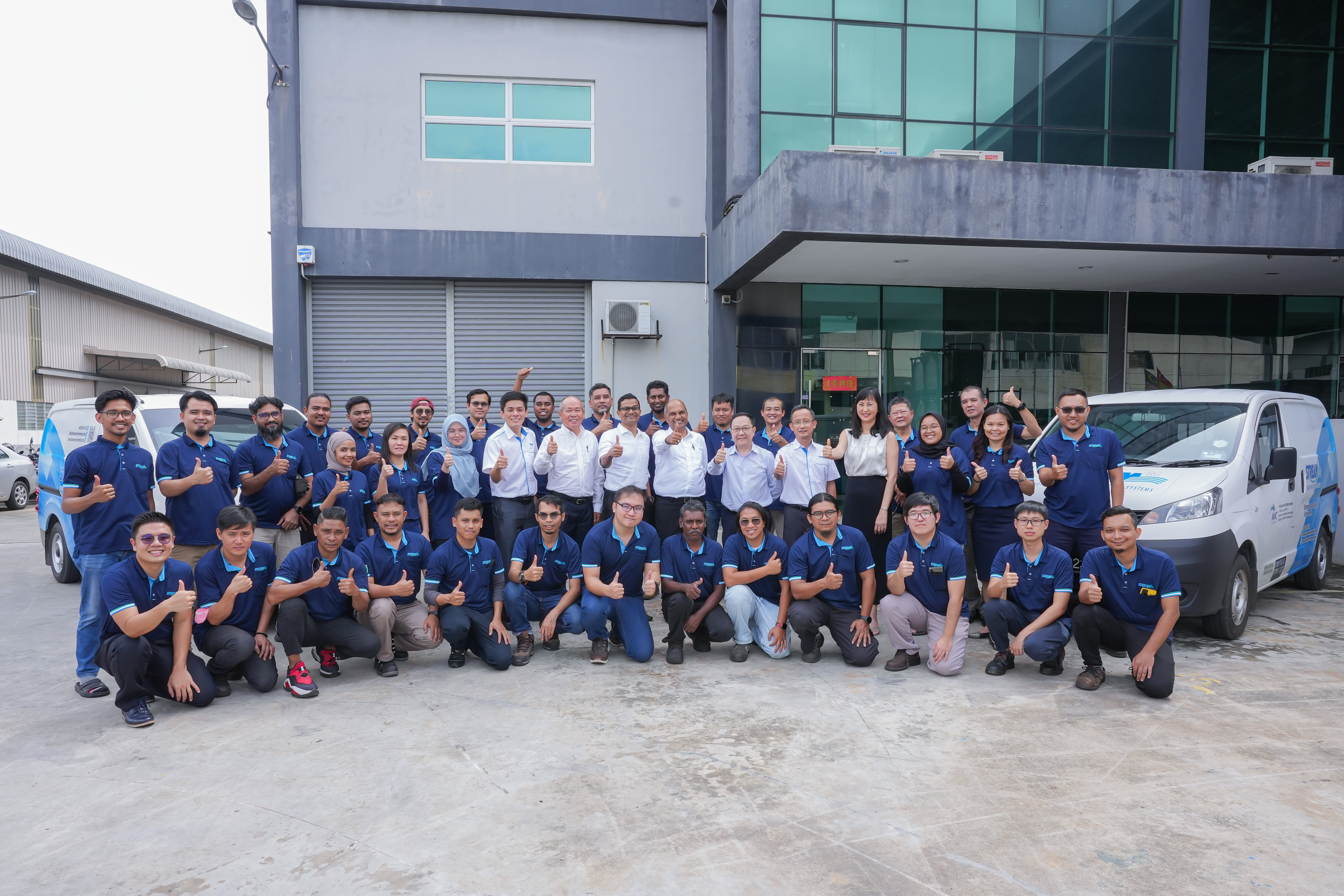
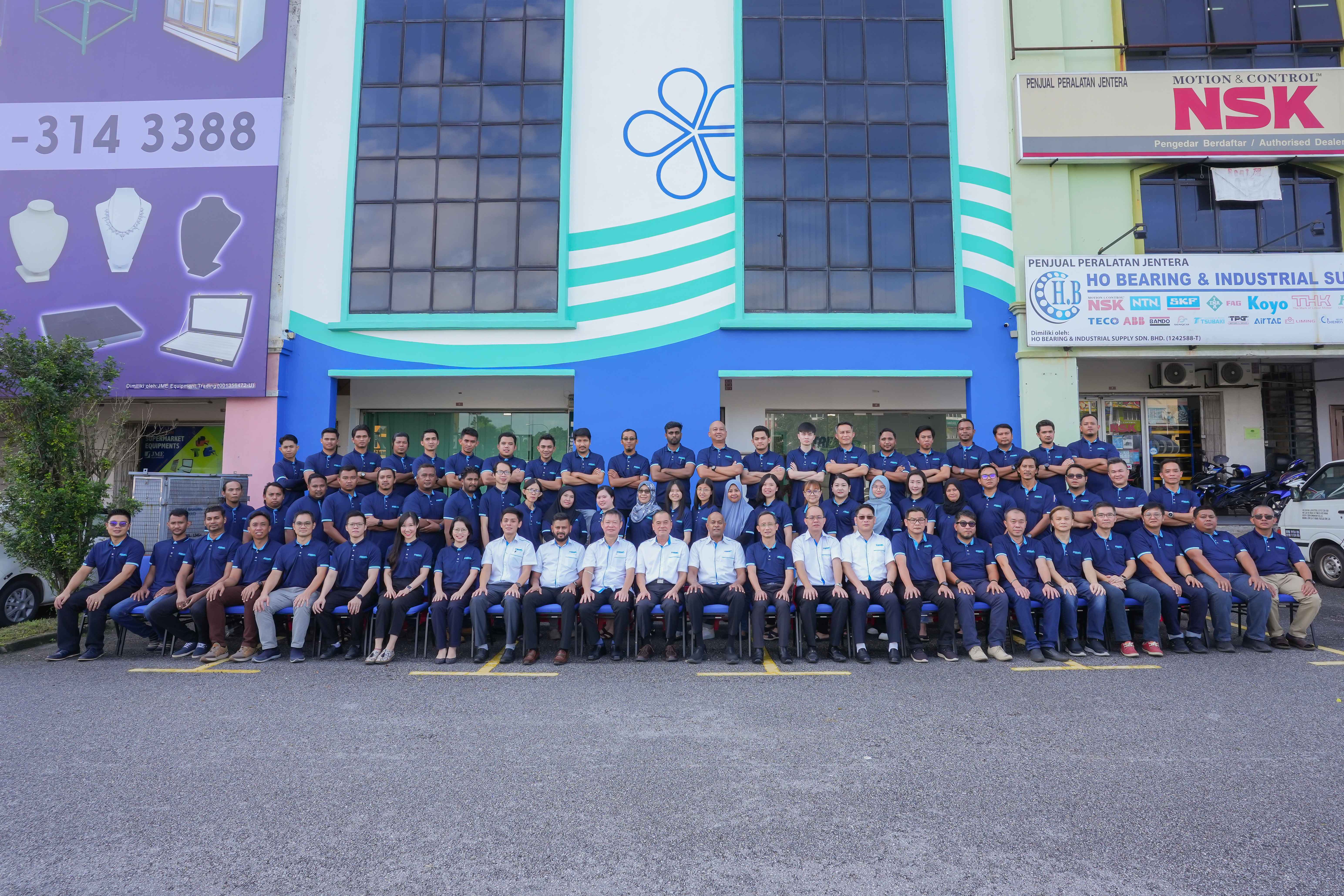
Owning the manufacturing matters more than it first appears. A vendor that only assembles third-party components cannot modify a valve profile for an awkward riser, nor stock spares for a system installed fifteen years earlier. AWC Berhad's environmental division designs and builds its own valves, load stations and control systems, which is why the patented Shuttle Vacuum System exists at all. Proprietary development of that kind is only viable where the engineering sits in-house rather than in a supplier's catalogue.
From Malaysia to Global Mega-Projects
The direction of travel favours the technology. Several of the largest master-planned developments now under construction worldwide make automated waste collection compulsory at planning stage rather than optional. Nusantara in Indonesia and Neom in Saudi Arabia both fall into that category, and both dwarf anything built to date in scale. For a group already operating across nine countries with a proven municipal-scale reference in Abu Dhabi, that shift in procurement norms is a structural tailwind rather than a speculative one.
Why the Group Structure Matters to Developers
Buying AWCS from a standalone vendor creates a question that surfaces around year eight. Who maintains a buried pipe network once the installer has moved on? Who holds the knowledge to diagnose a fault in a system nobody can see?
Sitting inside AWC Berhad changes that calculation. The group provides facilities management, maintenance contracting and asset management as core business. Operational continuity therefore becomes structural rather than a matter of contractual goodwill. For infrastructure with a design life measured against the building itself, continuity is worth more than a marginal difference in capital cost.
Future-proof Your Next Landmark Development
Contact Stream Environment for a technical consultation on integrating automated waste solutions into your master plan from day one.
Discover how STREAM and AWC Berhad can integrate automated waste solutions into your master plan from day one. Contact our engineering team for a technical consultation.
Frequently Asked Questions
Frequently Asked Questions
1. Is STREAM a subsidiary or a separate company?
STREAM Environment is the wholly-owned environmental division of AWC Berhad, a company listed on Bursa Malaysia.
2. What does AWC Berhad do beyond waste?
The group operates four divisions covering Integrated Facilities Management, Engineering Services, Environment and Rail.
3. Does STREAM manufacture its own equipment?
Yes. STREAM designs, manufactures, installs and maintains complete systems rather than integrating third-party components.
4. How large can a STREAM network get?
Al Raha Beach Phase I in Abu Dhabi runs 21,000 metres of pipe at roughly 210 tonnes daily. That places it among the largest deployments worldwide.
5. Who handles maintenance after installation?
Maintenance sits within the wider AWC Berhad group, which operates facilities management and asset management as core divisions.
Building Sustainable Urban Futures
Combining STREAM's engineering with AWC Berhad's facilities management capability produces an end-to-end proposition. Design, delivery and long-term operation come from one group. Three separate procurement exercises become one.
For developers and architects, that reduces interface risk. It does so on exactly the kind of infrastructure where such risk is most expensive to discover late.