
The Underground Revolution in Urban Sanitation
In high-density cities, the traditional routine is becoming obsolete. Storing, hauling and collecting refuse with surface wheelie bins and diesel lorries no longer fits how these buildings work. As developments grow taller and denser, manual waste handling creates operational bottlenecks, sanitation hazards and constant traffic congestion. An automated waste collection system (AWCS) rewrites that process. Waste removal becomes a continuous subterranean utility, much like water, electricity or gas.
At Stream Environment, we have been engineering automated waste collection systems since 1991, delivering sealed subterranean networks across residential, commercial, healthcare and airport developments worldwide.
Rather than sending workers to roll heavy bins through service corridors and lifts, an automated waste collection system uses pneumatic pressure to move refuse underground. Waste enters at conveniently placed disposal inlets and waits in sealed holding valves. It then travels through a network of buried pipes to a central collection facility, which can sit kilometres away.
High-speed vacuum technology replaces manual handling. A master plan can then eliminate surface-level waste staging entirely. Public spaces stay clean, odours stay contained, and the development gains sanitation infrastructure built for how cities actually work now.

Why an Automated Waste Collection System is Essential for Modern Developments
Traditional waste handling relies on open bins and dedicated storage rooms that inevitably emit foul odours, leak corrosive leachate, and attract urban pests such as rodents and insects. An automated waste collection system solves these sanitation vulnerabilities by operating entirely under continuous negative air pressure within sealed subterranean pipes. This guarantees that smells, bacteria, and toxic liquids remain completely trapped inside the network, preserving pristine public hygiene and creating scent-free environments throughout high-density commercial and residential spaces.
Beyond hygiene, replacing conventional waste rooms and bulky ground-floor bin staging areas with compact disposal inlets yields massive architectural advantages. Developers can reclaim hundreds of square metres of valuable floor space previously wasted on bin storage and wide service corridors, converting those areas into revenue-generating retail outlets, additional parking bays, or green recreational zones. Furthermore, removing heavy, water-logged rubbish bins from service lifts and hallways eliminates physical bottlenecks and protects interior finishes from constant wear and tear.
From an operational and environmental perspective, AWCS fundamentally transforms district-wide logistics. By routing all refuse underground to a single, off-site central collection facility, the system eliminates the need for heavy diesel rubbish lorries to navigate narrow service roads—significantly cutting local traffic congestion, noise pollution, and carbon emissions. Operating continuously 24/7, this automated pneumatic network moves waste instantly upon disposal, drastically reducing manual labour dependency, lowering workplace injury risks, and cutting long-term facility management costs.
How the Pneumatic Process Operates: Step by Step
Source Disposal at Load Stations
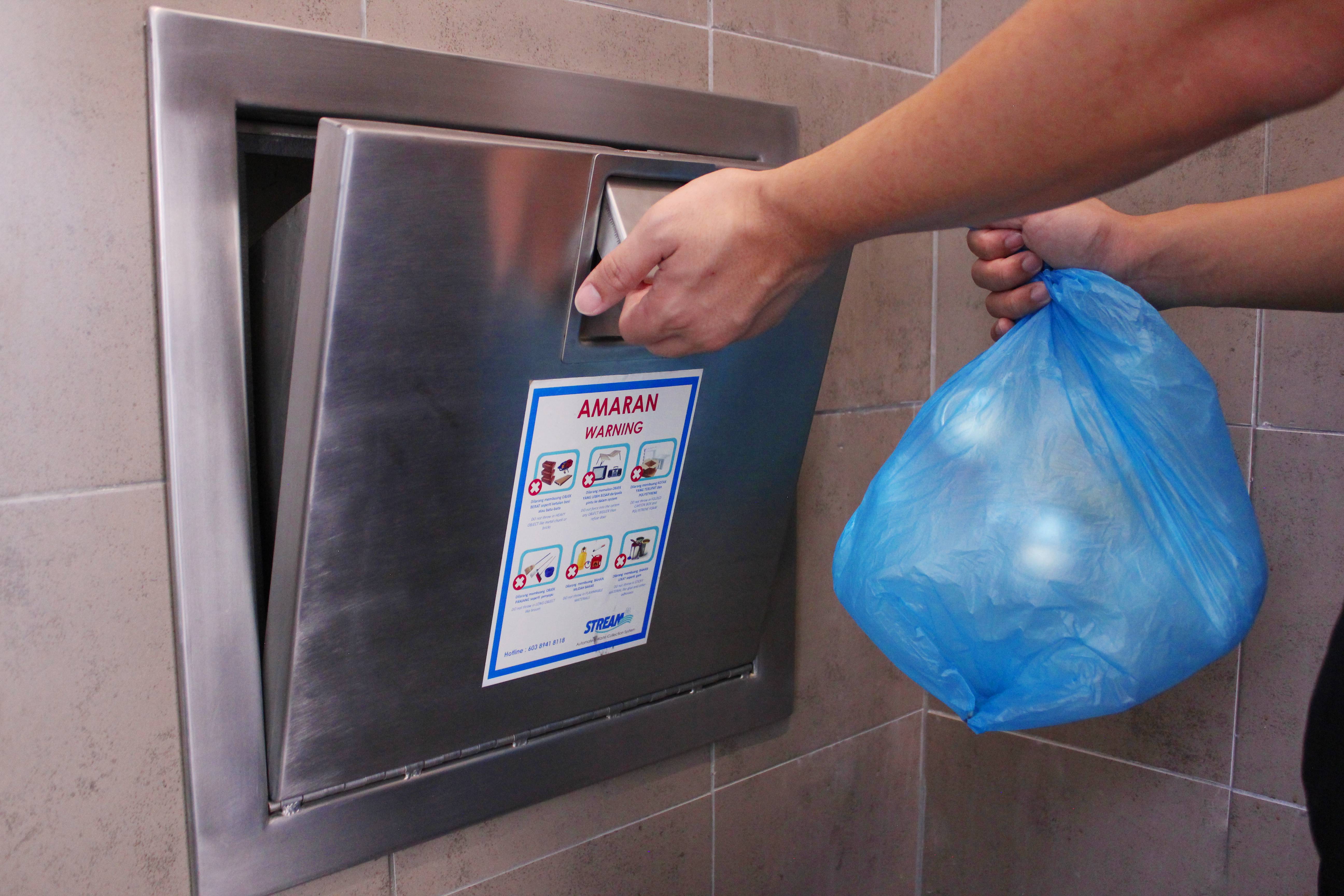
The process begins at user-friendly load stations situated inside residential corridors, commercial kitchens, or public outdoor plazas. Users simply deposit bagged waste into dedicated inlets - often segregated into general refuse, recyclables, or organic streams - ensuring clean source-separation right from the start.
Temporary Storage in Sealed Discharge Valves
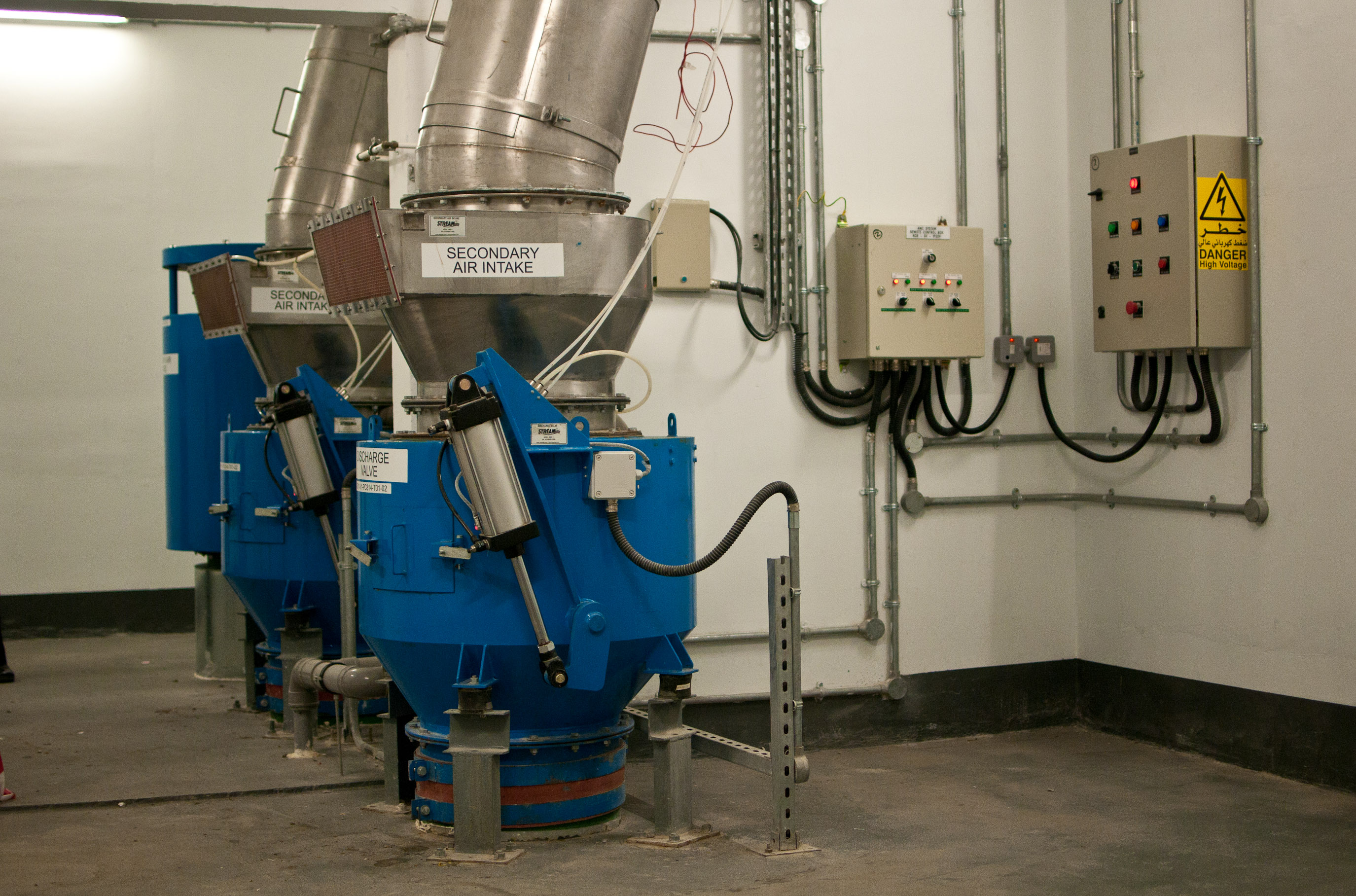
Once deposited, waste drops down a vertical chute and rests above a heavy-duty discharge valve located in the building's basement or utility zone. The valve keeps the waste completely sealed off from the main transport network until a collection cycle is initiated, preventing any foul smells or gases from escaping into the surrounding building.
Vacuum Activation & High-Velocity Transport
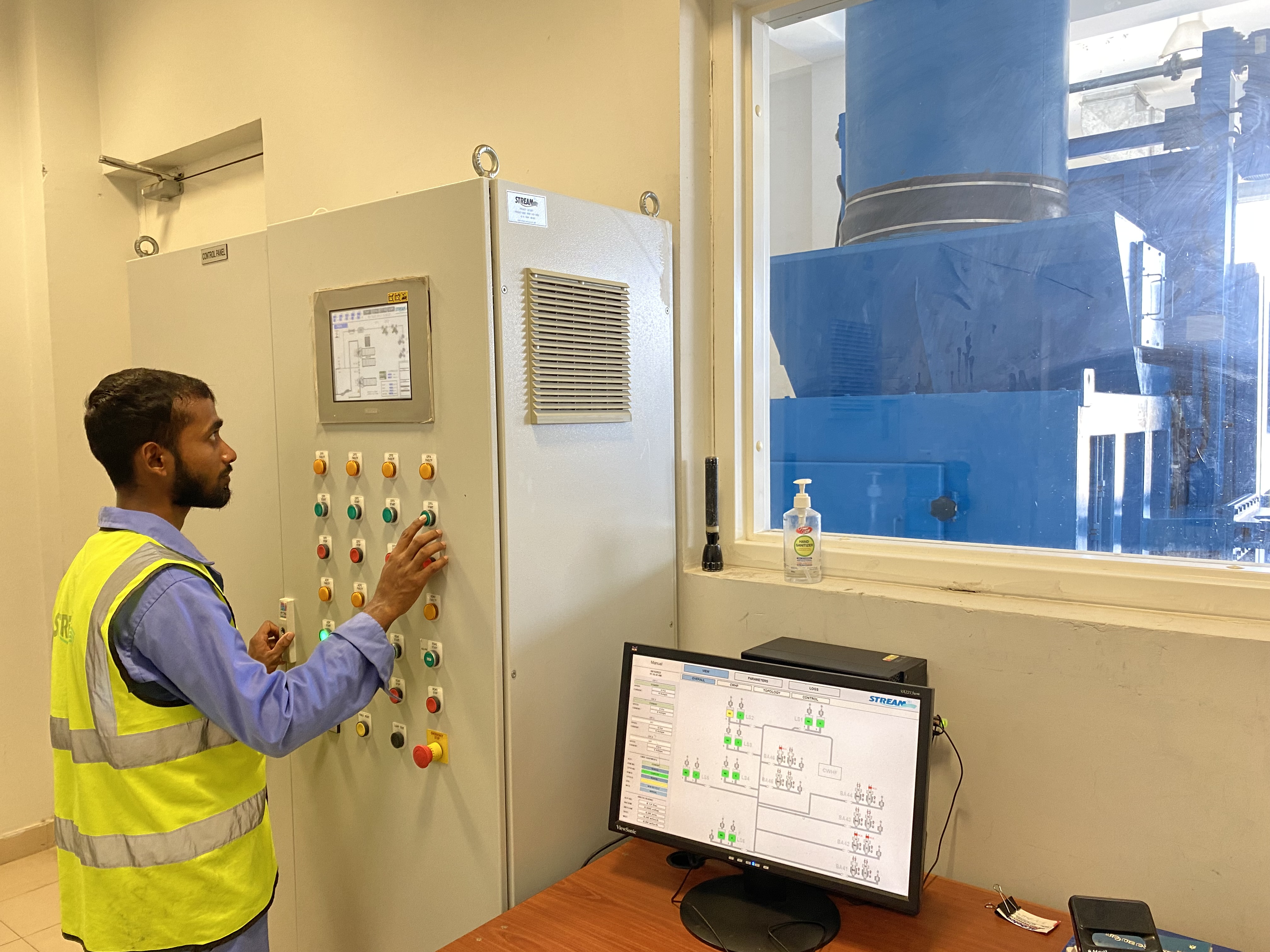
When the discharge valve receives an automated signal to clear, powerful exhausters located at the Central Waste Handling Facility (CWHF) create a strong suction inside the pipe network. The valve opens, and atmospheric air rushes in, pulling the waste into the subterranean pipe grid at speeds of up to 70 km/h.
Automated Separation and Compaction
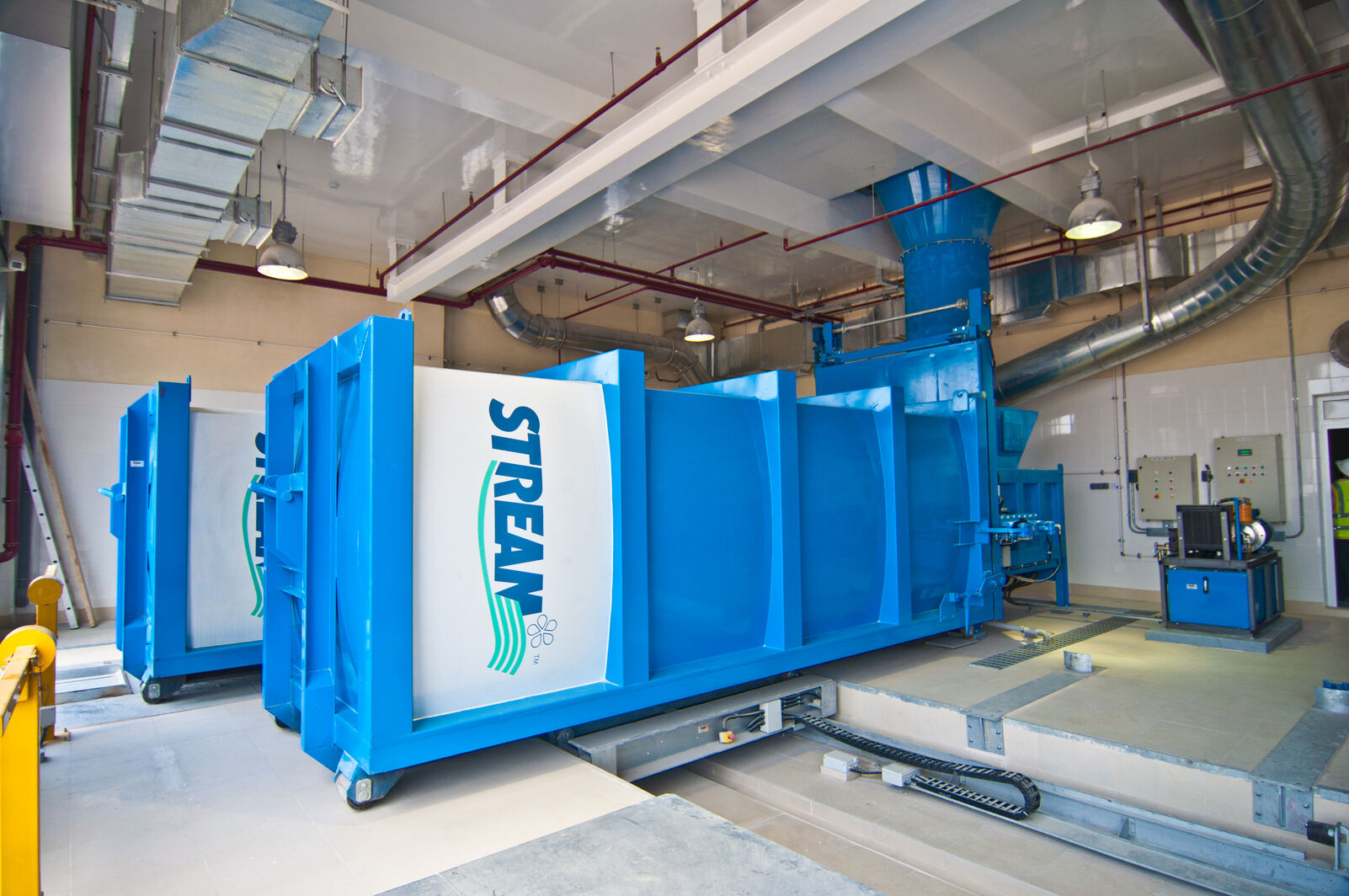
At the central facility, the high-speed air stream enters a cyclone separator where waste is pulled out of the airflow by centrifugal force and gravity. The collected waste is then automatically compacted into sealed, heavy-duty containers, while the transport air passes through high-efficiency dust filters and advanced carbon deodorisers before being cleanly discharged into the atmosphere
Design Standards and Planning Requirements
Pneumatic systems are engineered infrastructure, not fittings, and they are increasingly governed as such. Singapore's Code of Practice on Environmental Health requires any pneumatic waste conveyance system to comply with Singapore Standard SS 642. It also sets hard dimensional rules. Square refuse chutes must offer a cross-sectional area of at least 0.3 square metres. Round chutes need a minimum internal diameter of 600 millimetres. Chutes must be reinforced concrete, and hopper openings must be volume-controlled to keep oversized items out.
Those numbers matter at drawing stage rather than on site. Riser positions, chute dimensions and facility location are inexpensive decisions in a master plan. After handover they become costly ones.
Pioneering Sustainable Utilities in Modern Master Plans
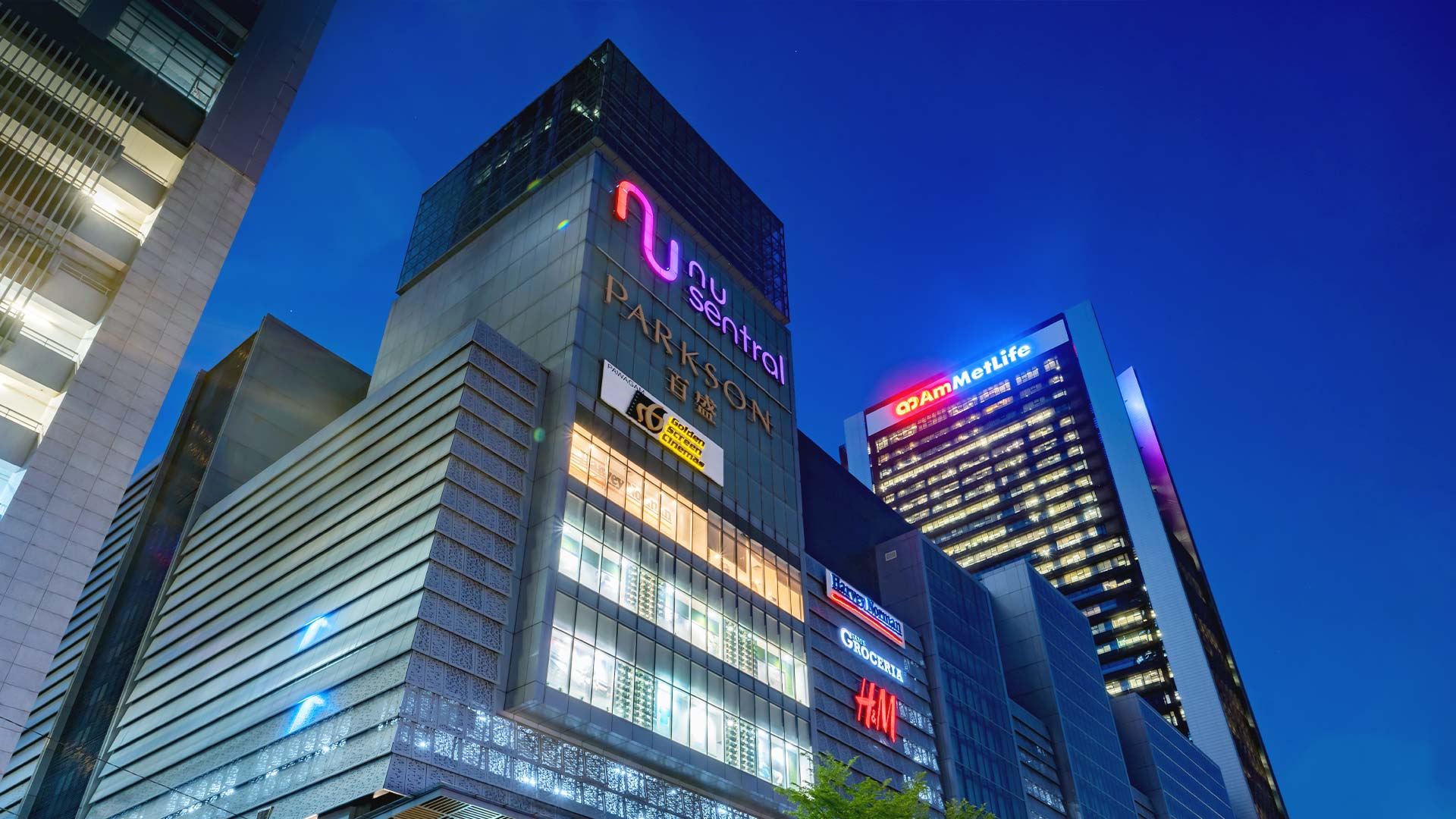
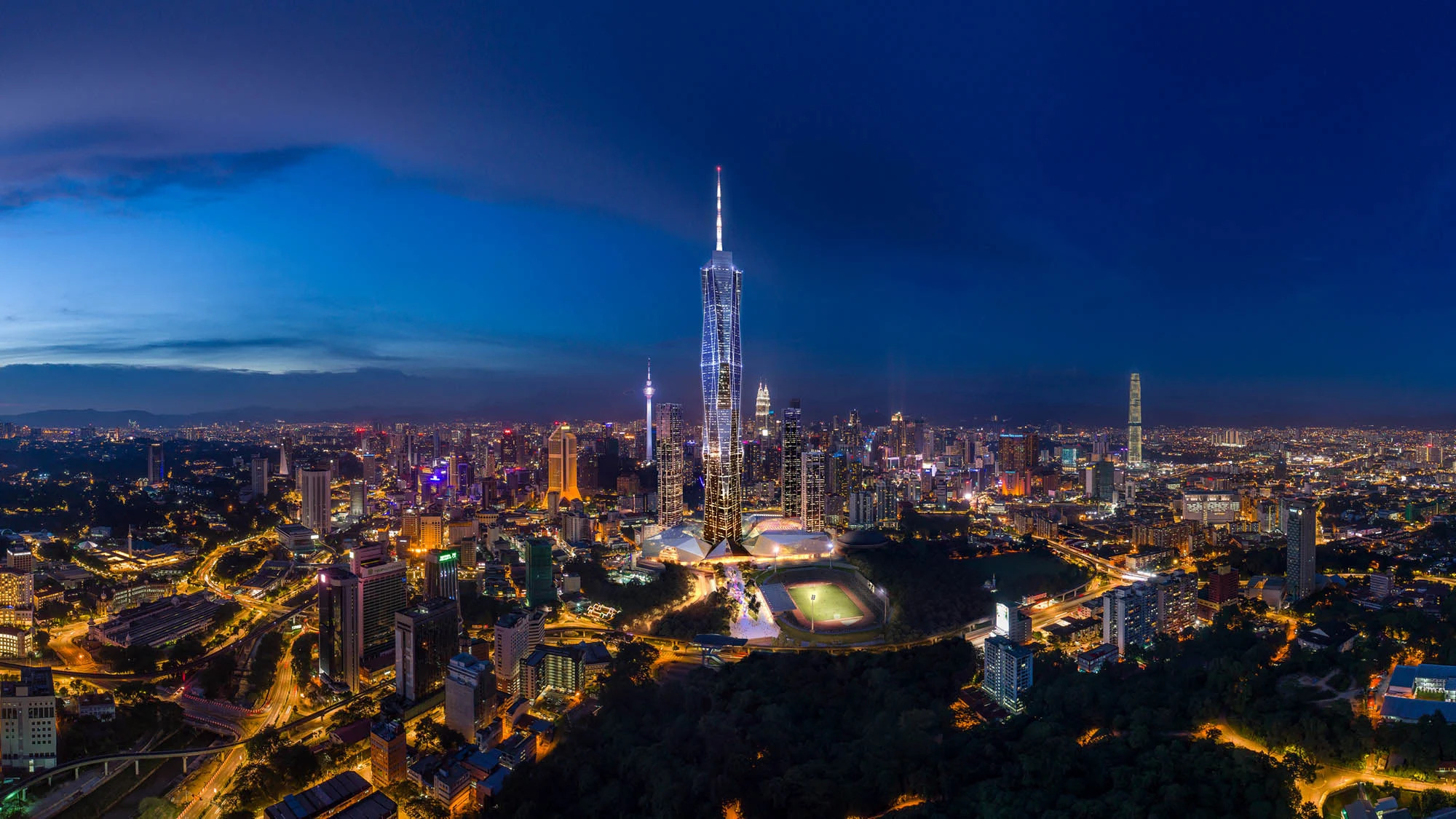
STREAM has been engineering these systems since 1991 and now operates across nine countries. Aspen Vision City in Penang and Merdeka 118 in Kuala Lumpur both run STREAM infrastructure. Both use hybrid configurations rather than a single system type. Large mixed-use schemes rarely fit one model. A residential tower, a retail floor and a food and beverage operation each produce a different waste stream at a different rhythm.
That flexibility is the practical argument for treating collection as a designed utility. One automated waste collection system can serve several waste types, building uses and disposal patterns through a single buried network. One facility receives all of it. Depending on the building type, that network may run on a Gravity Vacuum System for residential towers or aFull Vacuum System for commercial and catering environments.
Why AWCS Belongs in Your Master Plan
An automated waste collection system removes waste underground. Odours, pests and bulky bin rooms disappear in one move. Replacing rubbish lorries with vacuum pipes recovers floor space, improves public hygiene and lowers long-term operational cost.
The decision is easiest to make early. Once a layout is frozen, every element of the system becomes harder and more expensive to accommodate.
Partner with STREAM to Engineer Cleaner Environments
Future-proofing modern urban developments requires infrastructure that keeps pace with high-density living. STREAM collaborates with visionary developers, architects, and city planners to replace outdated bin collection routines with high-speed subterranean pneumatic networks. By engineering customized, touchless waste utilities into master plans, we help you eliminate surface-level pollution, recover premium real estate, and set a global benchmark for clean, resilient, and scent-free communities.
Frequently Asked Questions
1. How far can waste travel through the pipe network?
STREAM systems convey waste up to 2.5 kilometres from the disposal point to a sealed container. Distance is set during design rather than fixed by the technology.
2. What stops odour escaping at the inlet?
The network operates under negative pressure, so air flows inwards. The discharge valve isolates stored waste from the transport pipes between cycles. Exhaust air is filtered and deodorised before release.
3. Does the system run continuously or on a schedule?
Cycles trigger automatically when sensors detect a discharge valve has reached capacity. No fixed collection round exists, so peak periods clear without a backlog.
4. Can one network handle general refuse, recyclables and food waste?
Yes. Dedicated inlets keep each stream separate through the network. That separation is what makes recyclables and organic material viable for onward processing rather than landfill.
5. Can an automated waste collection system be retrofitted to a completed building?
Sometimes, and STREAM has delivered retrofits. Routing pipe through a finished structure is the main constraint. Retrofit therefore costs considerably more than designing the system in from the outset.